What Colors Are on a Vinyl Siding Color Chart?
The colors on a vinyl siding color chart fall into whites and creams, grays, beiges and browns, blues, greens and reds. Each CertainTeed vinyl line offers 27 to 34 solid colors plus 4 to 12 blend colors.
By the ACM Pros team, Madison, AlabamaPublished 11 minute read
The colors on a vinyl siding color chart fall into whites and creams, grays, beiges and browns, blues, greens and reds. Each CertainTeed vinyl line offers 27 to 34 solid colors plus 4 to 12 blend colors. Palettes differ by manufacturer, so compare any chart with physical panels in daylight before you order. Dark shades fade most, so check the warranty first.
Key Takeaways
- Vinyl siding colors fall into six families: whites, grays, beiges and browns, blues, greens, and reds.
- CertainTeed offers 27 to 34 solid colors per vinyl line, so charts differ from brand to brand.
- Dark colors show fading most, and fade warranties are measured in Hunter Units (a color-difference scale).
- Samples checked in daylight beat any screen swatch.
- Painting vinyl a darker color risks warping, so match or lighten the original shade.
What Is on a Vinyl Siding Color Chart?
A vinyl siding color chart shows every shade a manufacturer offers, grouped by color family and labeled by name and code. Each swatch shows the panel color, and many charts also show the siding profile that carries it. Our siding installation work starts with a chart like this one before any panel goes on a wall.
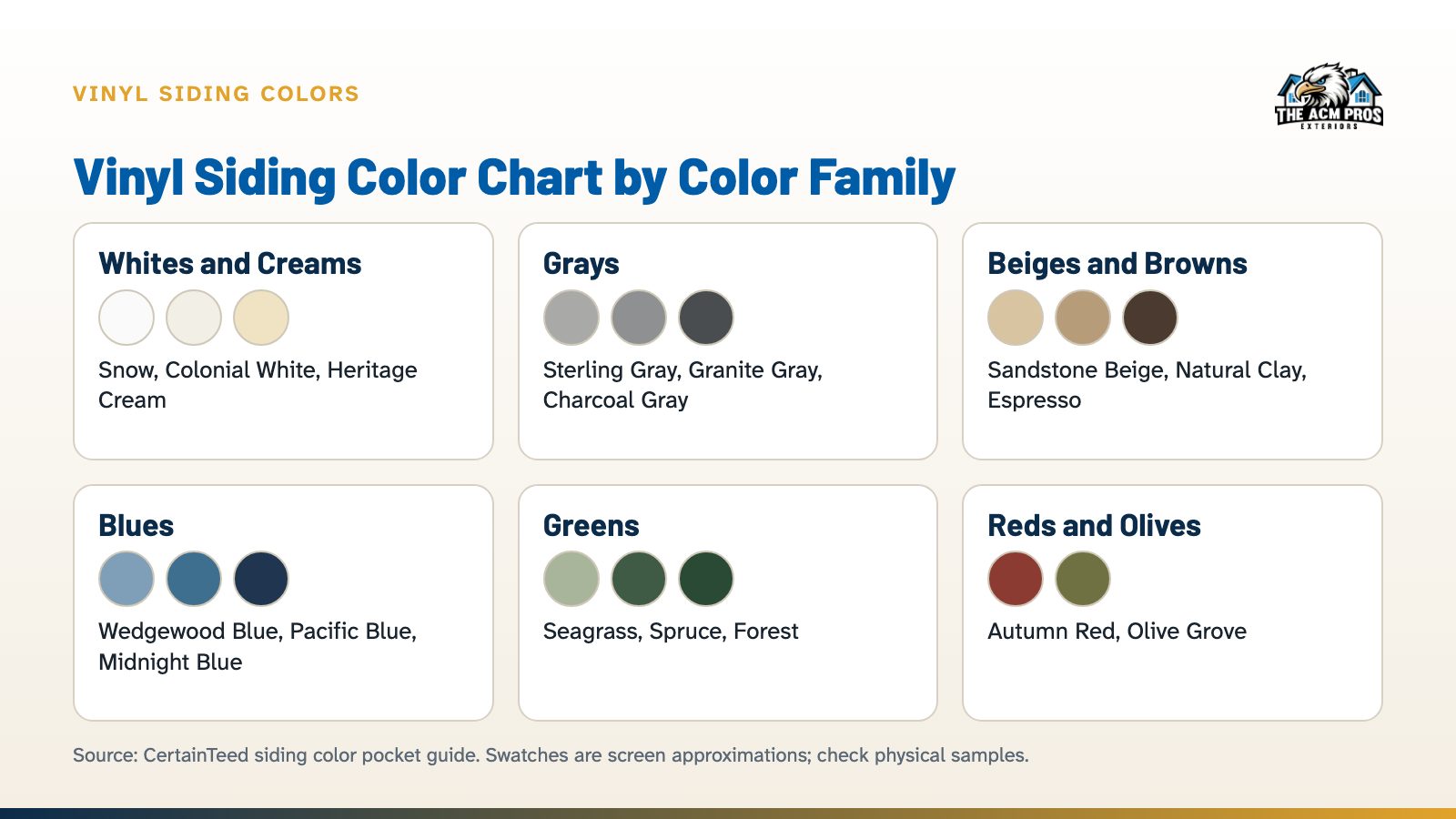
Vinyl siding color charts also separate solid colors from blends. CertainTeed adds 4 to 12 blend colors per line to its 27 to 34 solids. Some blends carry a premium label. The graphic below groups real color names into families.
What Are Standard Vinyl Siding Colors?
Standard vinyl siding colors are the whites, creams, grays, beiges and tans that every manufacturer stocks. Colonial White, Snow and Heritage Cream sit in the white family, while Sandstone Beige and Natural Clay anchor the neutrals. Premium lines add darker shades such as Charcoal Gray, Forest and Midnight Blue.
The table lists sample names from the CertainTeed color guide. A sentence below it explains how to read the family column.
Sample vinyl siding colors by family, from the CertainTeed color guide
| Color family | Sample color names | Tone |
|---|---|---|
| Whites and creams | Snow, Colonial White, Heritage Cream | Light |
| Grays | Sterling Gray, Granite Gray, Charcoal Gray | Light to dark |
| Beiges and browns | Sandstone Beige, Natural Clay, Espresso | Light to dark |
| Blues | Wedgewood Blue, Pacific Blue, Midnight Blue | Mid to dark |
| Greens | Seagrass, Spruce, Forest | Light to dark |
| Reds and olives | Autumn Red, Olive Grove | Mid to dark |
The tone column shows which families include dark shades, and dark shades matter for fading, which comes up after the popular choices.
How Do Exterior Vinyl Siding Color Charts Group Colors?
An exterior vinyl siding color chart groups colors by family first and by profile second. Whites, grays, earth tones, blues and greens form the usual headings. Each brand then marks which profiles, such as lap or shake, come in each shade.
An earth tone vinyl siding color chart gathers beiges, tans, browns and olive greens in one block. Those warm neutrals pair with brown and tan roofs. The next section covers which families homeowners pick most today.
What Are the Most Popular Vinyl Siding Colors Right Now?
White and gray are the most popular vinyl siding colors right now, followed by beige, earth tones and blue. Dark charcoal and deep navy appear as modern accents, usually paired with white trim.
Every vinyl siding colors chart from a manufacturer includes these families. Gray works across traditional and contemporary homes. Beige and soft green suit wooded lots and suburban streets. Blue fits coastal looks and white trim. Our recent projects page shows how these shades look on finished homes.
Siding trends also change by year, so a shade popular in 2026 may feel dated later. Neutral families tend to age well. Lighter neutrals also hide fading better, which leads to the fade question.
What Color Vinyl Siding Fades the Most?
Dark colors such as black, dark gray, deep blue, and rich red or green show fading the most on vinyl siding. A small chalky shift stands out against a deep pigment, while white and beige hide it. Dark shades also absorb more solar heat.
Sherwin-Williams states that darker colors absorb more heat, which can make vinyl warp, buckle and distort. Manufacturers answer with heat-reflective pigments. Ply Gem says its SolarDefense line uses special pigments that reflect infrared rays to resist warping and fading.
What Color Siding Fades the Least?
Light colors such as white, cream, beige and light gray fade the least in appearance. Any color shift reads as less noticeable on a pale panel. Light shades also run cooler in direct sun.
The same light colors suit a wall that gets all-day sun. Mid-tones sit between the two groups. Warranty terms then decide how much fade the maker accepts.
Is There Any Vinyl Siding That Does Not Fade?
No vinyl siding is fade-proof, but warranties cap how much color change a maker allows. Westlake Royal Building Products warrants fade to as low as 3 Hunter Units, while most other vinyl makers warrant 4. Hunter Units measure color difference.
CertainTeed backs its vinyl with PermaCOLOR Lifetime Fade Protection, and Ply Gem backs SolarDefense with a 50-year warranty. Warranties also exclude heat from outside sources, such as reflected window glare. Read the fade limit before you choose a dark shade.
What Is a Hunter Unit in a Fade Warranty?
A Hunter Unit is a measure of color difference that a fade warranty uses to set how much change counts as fading. Gentek's Sequoia Select warranty treats a change greater than 3 Hunter Delta E units as excessive, measured under ASTM D2244. A lower number means a stricter limit.
Warranty text changes over time, so read the current terms for the exact line you pick. Compare the limit, the test method and any exclusions side by side. Wall direction matters as well.
Which Wall of the House Fades First?
South- and west-facing walls fade first because afternoon sun brings stronger light and higher surface temperatures. Suburban Wholesale describes ultraviolet radiation and solar heat as the forces that slowly affect siding pigments. North-facing walls stay shaded and weather differently.
Put a sample panel on the sunniest wall before you decide. A dark shade that looks fine in the shade may show more change in direct sun.
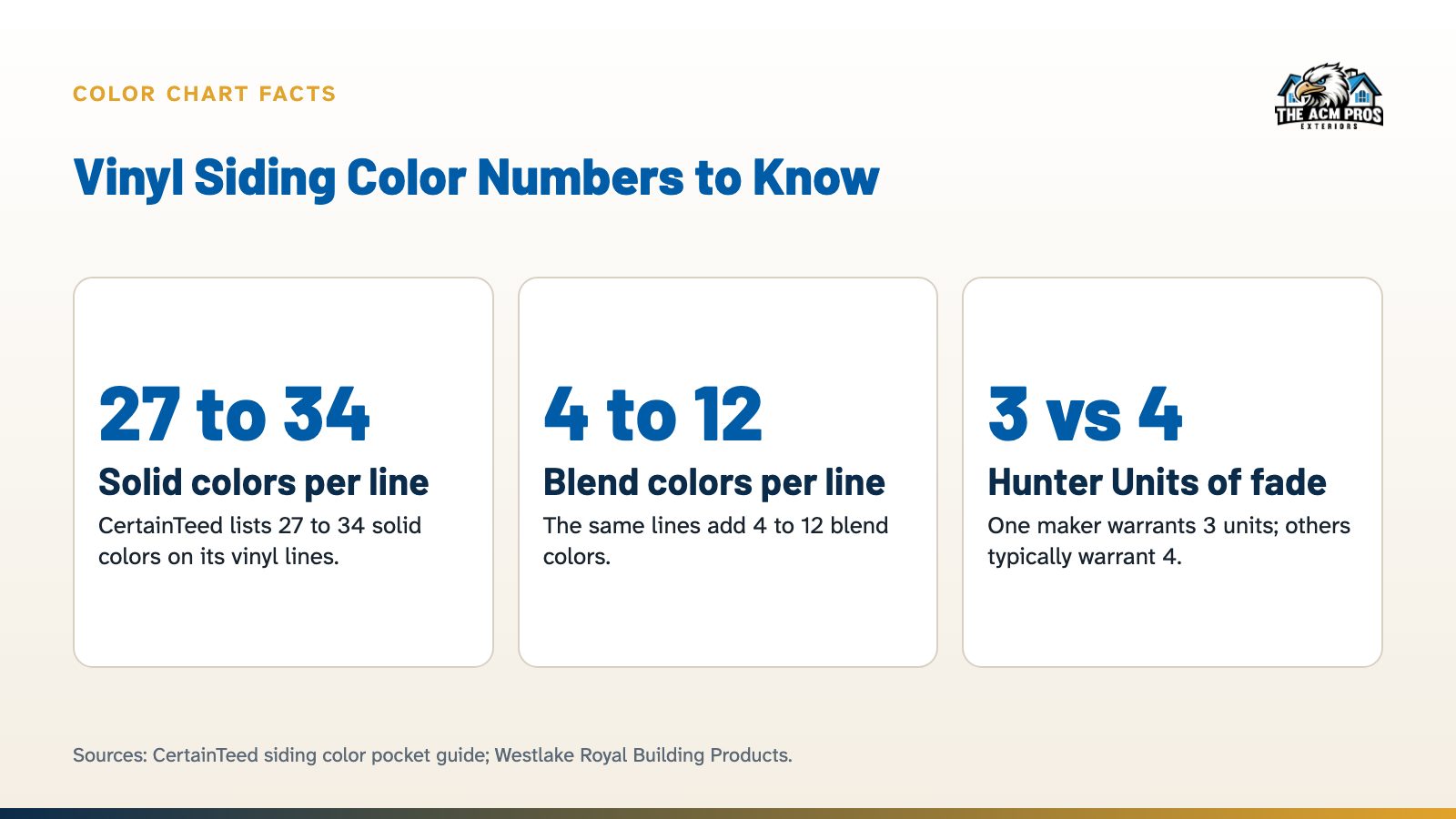
The infographic sums up the palette size and fade limits. The next section turns those facts into a selection method.
How Do You Choose From a Vinyl Siding Color Chart?
Choose from a vinyl siding color chart by ordering samples, testing daylight, matching the roof and checking the warranty. These four steps cut a long chart to two or three finalists. The list below puts them in order.
- Order vinyl siding color samples for your top three shades.
- Tape each sample to the wall and view it in morning, noon and evening light.
- Hold the samples next to your shingles, brick, stone and trim.
- Confirm the fade limit and heat-distortion terms for any dark shade.
Samples come first because the second step depends on them.
Why Should You Use Vinyl Siding Color Samples?
Vinyl siding colors samples are worth ordering because screens and printed charts shift every color. CertainTeed's own guide advises checking samples before you commit. A swatch on a monitor cannot show texture, gloss or how sunlight changes the shade.
Samples also let you compare a shade against the existing roof. Our new roof projects often pair siding and shingles at once. A vinyl siding color palette that looks right in the shop may read differently beside real shingles.
What Should You Ask Before You Order Vinyl Siding Color?
Ask for the fade limit, panel thickness, heat terms, sample size and color lot before you order vinyl siding color. Each item protects the color you chose from a later surprise. The list below turns the five items into a pre-order checklist.
- Fade limit: the Hunter Units the warranty allows and the test method it names.
- Panel thickness: 0.04 to 0.05 inch across the four common grades.
- Heat terms: whether dark colors carry a warp or distortion warranty.
- Sample size: a full-length panel tested in daylight, not a chip.
- Color lot: one lot for every wall, since installers match batches to avoid mismatch.
Panel thickness does not set fade resistance on its own. Gentek states that color formulation, not thickness by itself, is responsible for fade resistance on its 0.046 inch panel.
What Roof, Trim and Shutter Colors Pair With Each Siding Color?
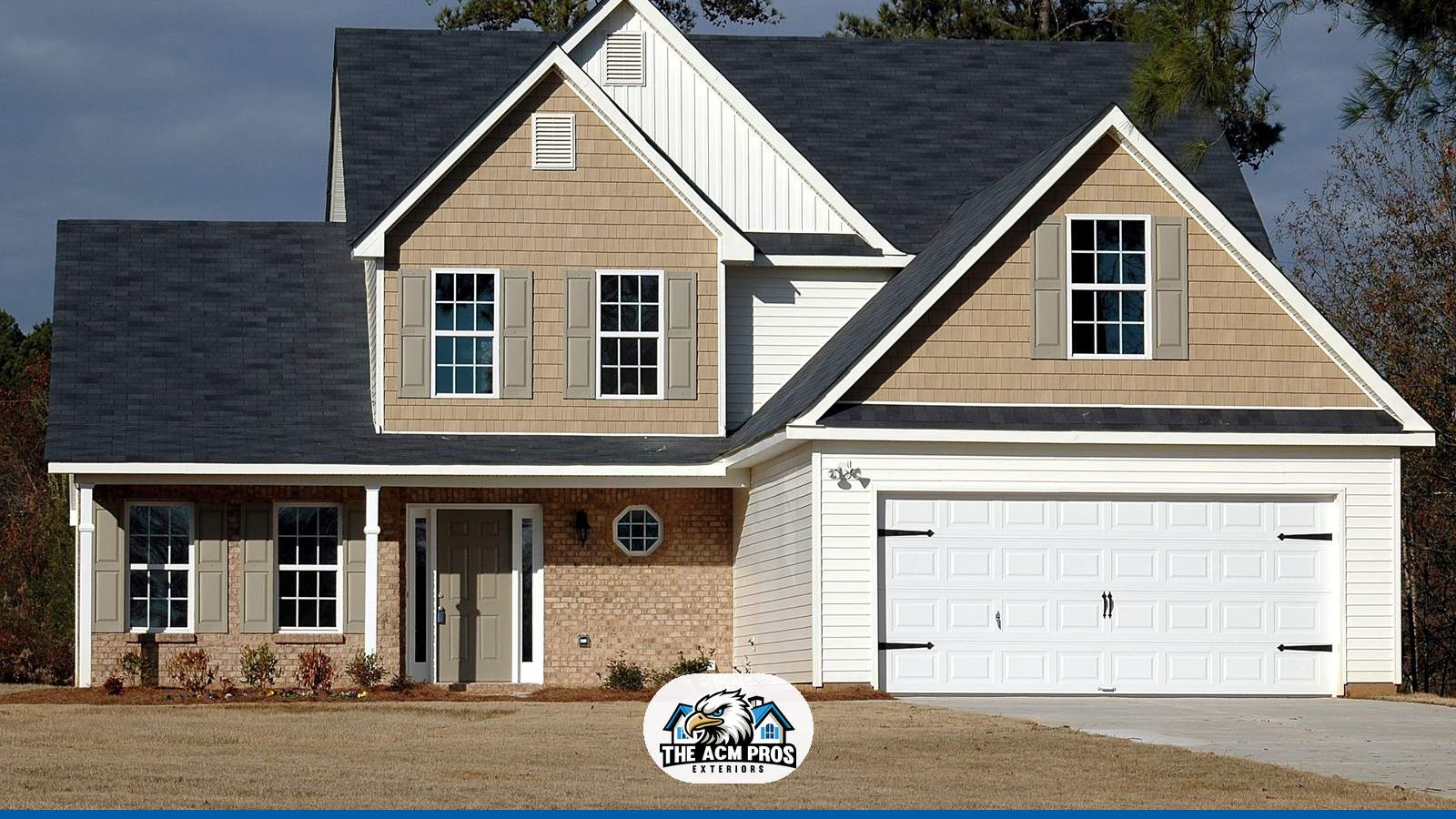
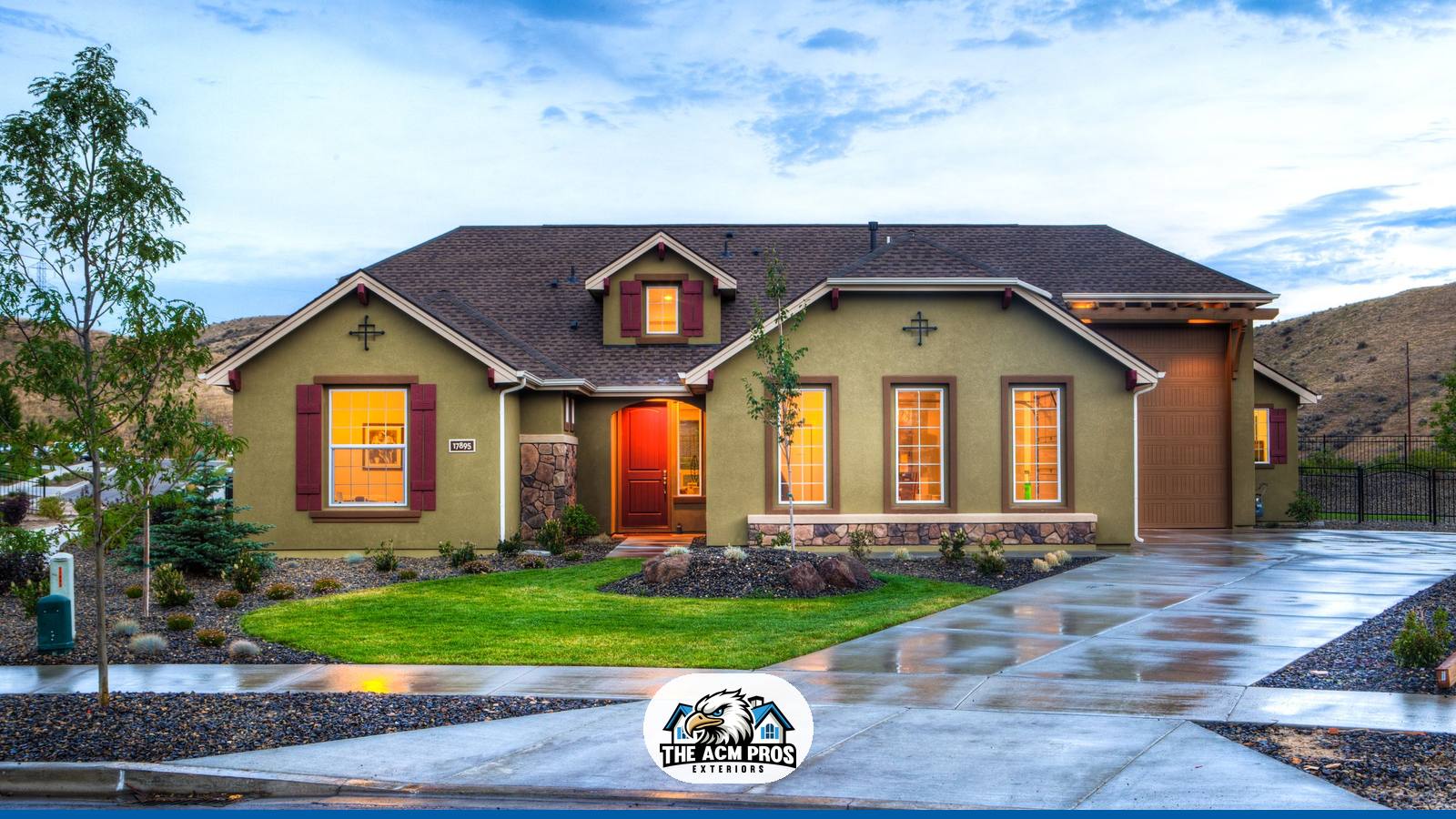
White trim pairs with nearly every siding family, and black or dark trim adds contrast on white, gray and blue siding. Brown and tan roofs suit warm shades such as beige and Natural Clay. Gray and black roofs suit cool shades. The panel below shows each pairing.
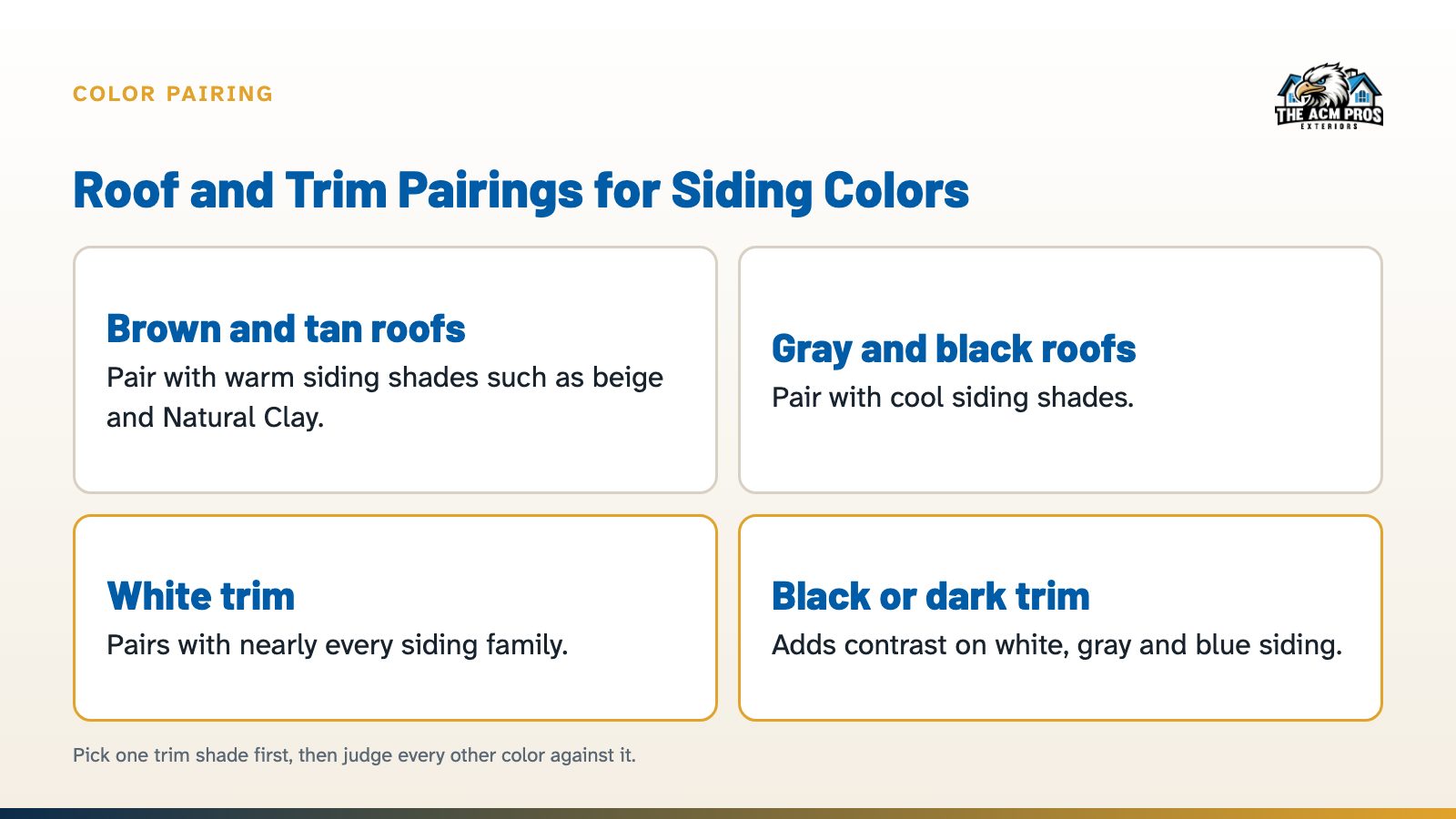
Accents then finish the look. Midnight Blue or Charcoal Gray shutters stand out on light siding.
Two or three trim shades are enough for any exterior. More shades make a wall look busy, and each added shade adds another sample to compare. Keep the palette short so each color stays visible from the street.
A bold front door adds color the same way. Trim, soffit and fascia usually match each other, so pick one trim shade for the whole house before you order panels. Choose that shade first, because every other color is judged against it.
What Do the Numbers Say About Vinyl Siding Colors and Cost?
The numbers on vinyl siding colors and cost include 27 to 34 solid colors and 3 to 4 Hunter Units. Each figure below comes from a named manufacturer, standards body or cost guide. The block groups them for quick comparison.
By the Numbers
- 27 to 34 solid colors and 4 to 12 blend colors per vinyl line: CertainTeed siding color pocket guide.
- 3 Hunter Units: the fade limit Westlake warrants at its lowest, while most other makers warrant 4.
- 3 Hunter Delta E units: Gentek Sequoia Select fade threshold under ASTM D2244, as summarized by Suburban Wholesale.
- 100 VinylSafe color options: Sherwin-Williams paint formulated to resist warping on vinyl.
- 50 years: the Ply Gem SolarDefense warranty length.
- 25.6%: vinyl share of exterior walls on new single-family homes started in 2023, behind stucco at 26.8% (NAHB, from Census Bureau data).
- 21.7% and 18.5%: fiber cement and brick shares for the same homes (NAHB).
- 0.04 to 0.05 inch: vinyl panel thickness across builder, standard, premium and insulated grades (Fixr).
- $12,000: average installed cost, within a $6,000 to $24,000 range (Fixr).
- $3,000 to $5,000: approximate cost to paint vinyl siding (Bob Vila).
Grade is the figure that links color to cost, because thicker panels cost more. Fixr prices four grades for a 2,000 square foot house, shown in the table.
Vinyl siding grades by thickness and installed cost, Fixr 2026 data
| Grade | Thickness | Cost per sq ft | Cost for 2,000 sq ft |
|---|---|---|---|
| Builder's grade | 0.04 in | $2 to $6 | $4,000 to $12,000 |
| Standard grade | 0.042 in | $4 to $7 | $8,000 to $14,000 |
| Premium grade | 0.046 in | $6 to $10 | $12,000 to $20,000 |
| Insulated grade | 0.05 in | $7 to $12 | $14,000 to $24,000 |
The premium grade costs about twice the builder's grade per square foot, and Fixr says it protects better against impact and warping. The chart below plots the same ranges.
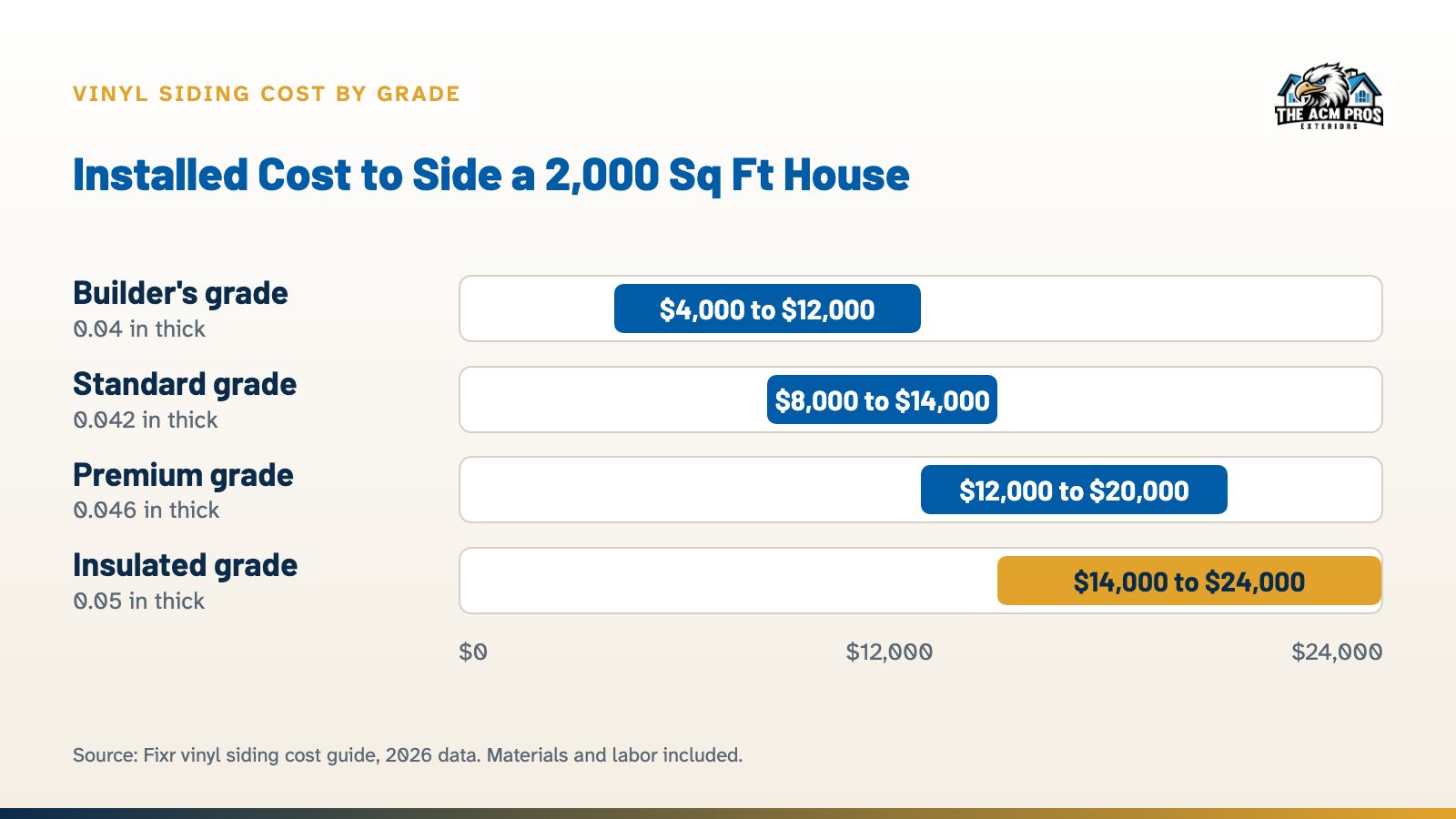
A shade choice does not change the grade, but a dark shade on a thin panel raises warp risk. That risk leads to the repaint question.
Can You Paint Vinyl Siding a Darker Color?
You can paint vinyl siding a darker color only with a vinyl-safe paint formulated to resist heat. Ordinary dark paint makes vinyl absorb more heat, which can warp, buckle or distort the panels. Sherwin-Williams says buyers once had to stay at the same shade or lighter.
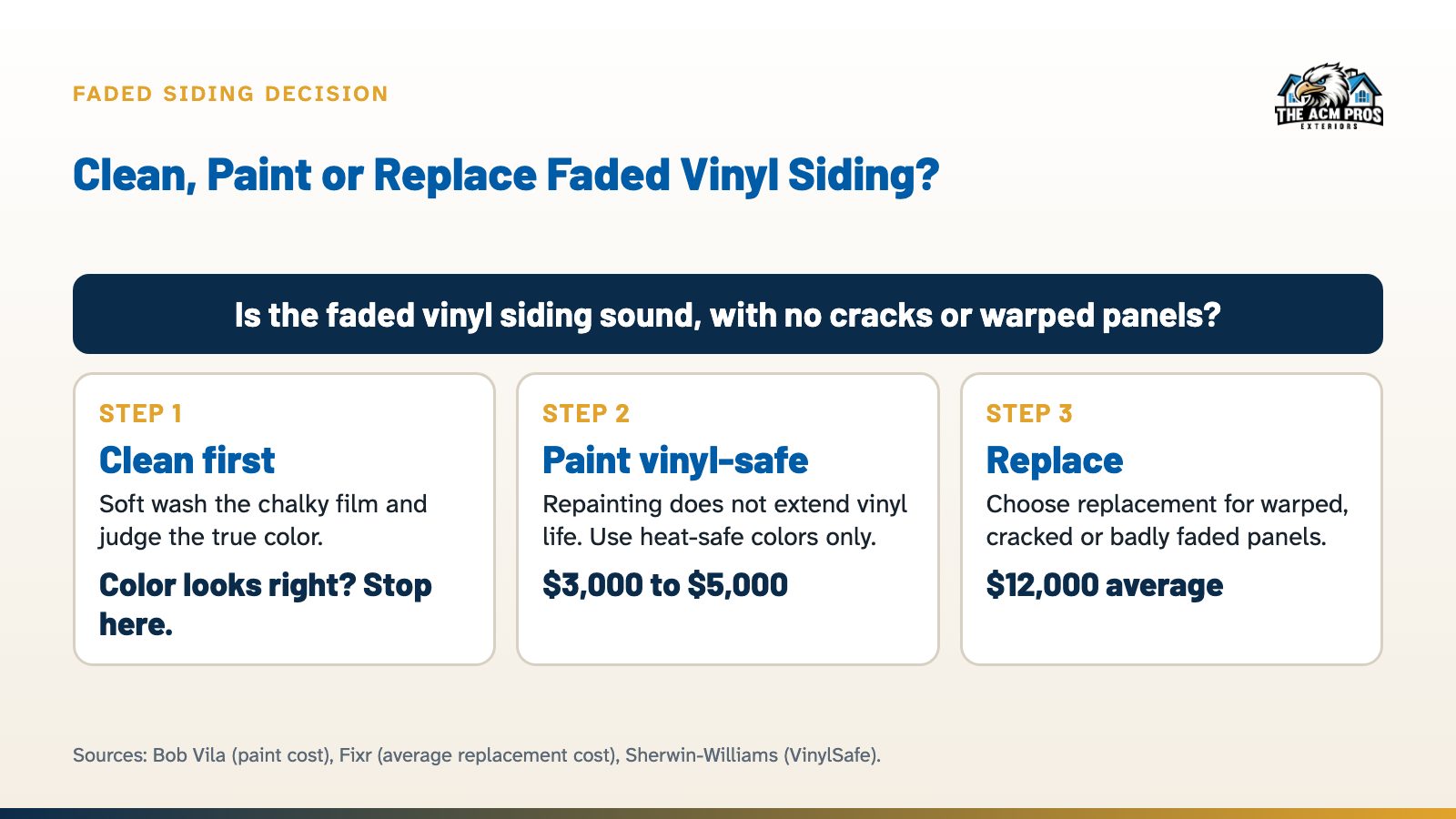
Sherwin-Williams now sells VinylSafe colors, with 100 color options formulated to resist warping on sound, stable vinyl. Painting also adds upkeep, and new panels carry a manufacturer fade warranty. Replacement is the cleaner choice when the siding is faded, cracked or warped.
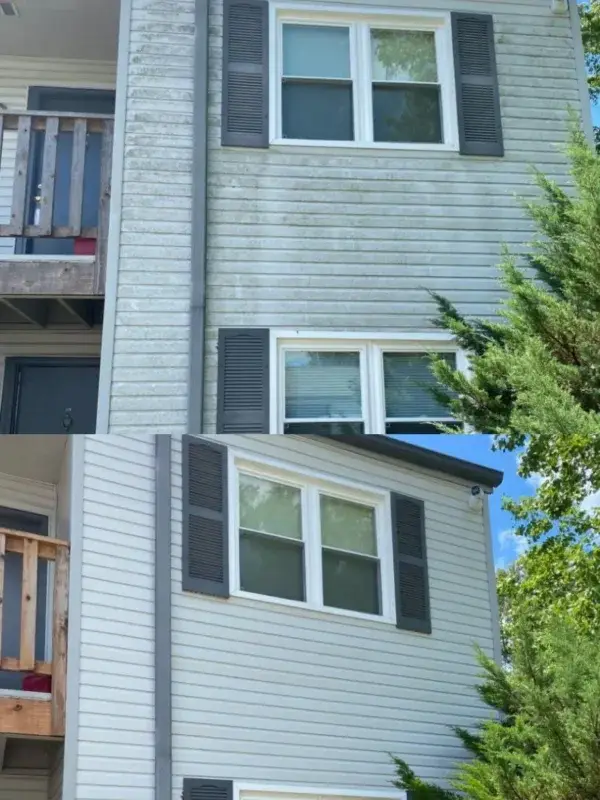
Faded but sound siding can sometimes be cleaned first. Chalky oxidation sometimes looks like fading, and soft washing removes surface film without harsh pressure. A cleaned panel shows its true color before you decide.
Is It Better to Paint Vinyl Siding or Replace It?
Painting vinyl siding is better when the panels are sound and only the color is tired. Replacement is better when panels are warped, cracked or badly faded. Bob Vila puts painting at approximately $3,000 to $5,000, while Fixr puts the average full replacement at $12,000.
This Old House notes that repainting does not extend the vinyl's lifespan, so paint changes the look only. The infographic orders the choices from the least to the most work.
What Else Should You Know About Vinyl Siding Colors?
Does Vinyl Siding Color Last Forever?
Vinyl siding color does not last forever, because sun and heat slowly change the pigment. The color runs through the panel, yet every fade warranty still names a limit. The list sorts four common myths from the facts.
- Myth: color runs through the panel, so it never fades. Fact: warranties still allow 3 to 4 Hunter Units of change.
- Myth: dark and light vinyl behave the same in sun. Fact: darker colors absorb more heat and can warp standard panels.
- Myth: any paint works on vinyl. Fact: Sherwin-Williams offers 100 VinylSafe colors because ordinary dark paint can warp panels.
- Myth: thicker panels cannot fade. Fact: Gentek says color formulation, not thickness by itself, sets fade resistance.
Is White Siding Still in Style?
White siding is still in style, and it remains a top choice alongside gray. Modern farmhouse looks pair white panels with black trim, windows and doors. White also hides fade better than deep shades.
How Do Double 4 Inch and Double 5 Inch Profiles Differ?
Double 4 inch and Double 5 inch profiles differ in shadow lines and seams, and the choice is a matter of style. CertainTeed lists Double 4 inch and Double 5 inch clapboard profiles in its line. Narrower courses give more shadow lines, and wider courses show fewer seams.
How Long Is Vinyl Siding Color Covered?
Vinyl siding color is covered by a fade warranty that is separate from the panel warranty. CertainTeed lists a Lifetime Limited warranty on its vinyl profiles. The fade warranty has its own limits, so read its terms before choosing a color.
Is Heat a Problem for Dark Vinyl Siding Colors?
Heat is a problem for dark vinyl siding colors that lack heat-reflective pigments. Vinyl also expands and contracts, so installers leave room for movement. Choosing a mid-tone or a heat-reflective line reduces that risk.
What Color Makes a House Look Expensive?
No single color makes a house look expensive, but a clean contrast between siding, trim and door reads as deliberate. Gray siding with white trim and a dark door is a common combination. Samples help you judge the pairing.
Frequently Asked Questions
Do Dark Siding Colors Make a House Look Smaller?
Yes, dark siding colors make a house look more compact, while white, cream and light gray look bigger by reflecting light. Trim in the same family keeps the lines uninterrupted.
What to Do With Faded Vinyl Siding?
Faded vinyl siding can be cleaned, painted with vinyl-safe paint, or replaced. Cleaning removes chalky film first. Replacement fits siding that is warped, cracked or badly faded.
Which Siding Color Combinations Are Trending?
Gray or white siding with black trim and accents is the newest color combination. Charcoal and deep blue shades also appear on modern homes. Heat-reflective dark colors make those looks easier to keep.
How The ACM Pros Helps With Vinyl Siding Colors
We help you turn a vinyl siding color chart into a finished wall. We bring physical samples, compare them with your roof and trim, and explain each fade warranty. Our crews handle removal, rotted framing repair and installation as part of siding replacement. The color you pick is the color that goes up.
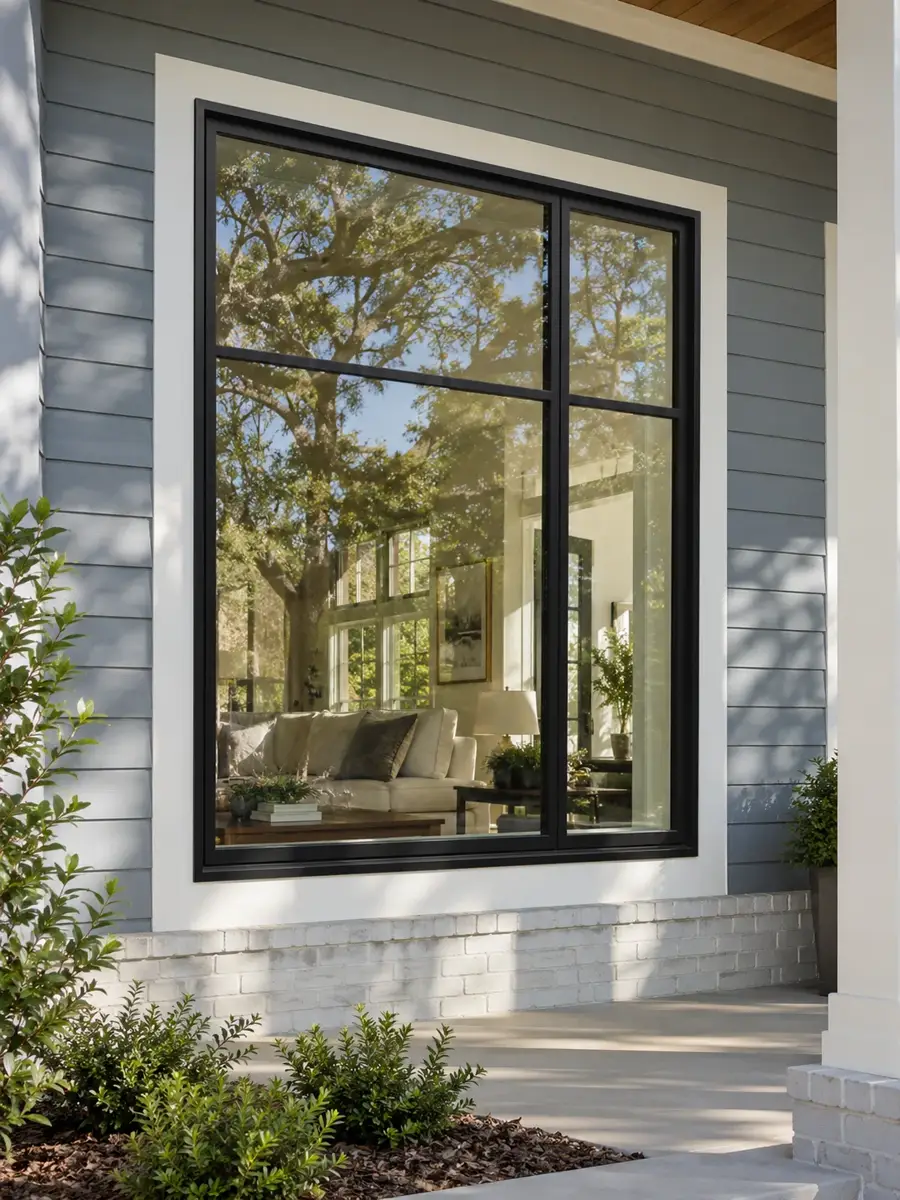
Window and door updates can follow the same color plan, so trim, glass and entry doors match the new panels. We install exterior windows in vinyl, fiberglass, wood and aluminum through our replacement windows service. Each job gets the same sample review.
Brad and Chase Miller run our family-owned crew, and every estimate is free and written. Each estimate visit includes a sample board for your wall, and the written scope names the exact color. Our crew holds the chart swatches against the roof and trim before any panel is ordered.
Call (256) 585-6817.