Which Vinyl Siding Cleaning Solution Should You Use?
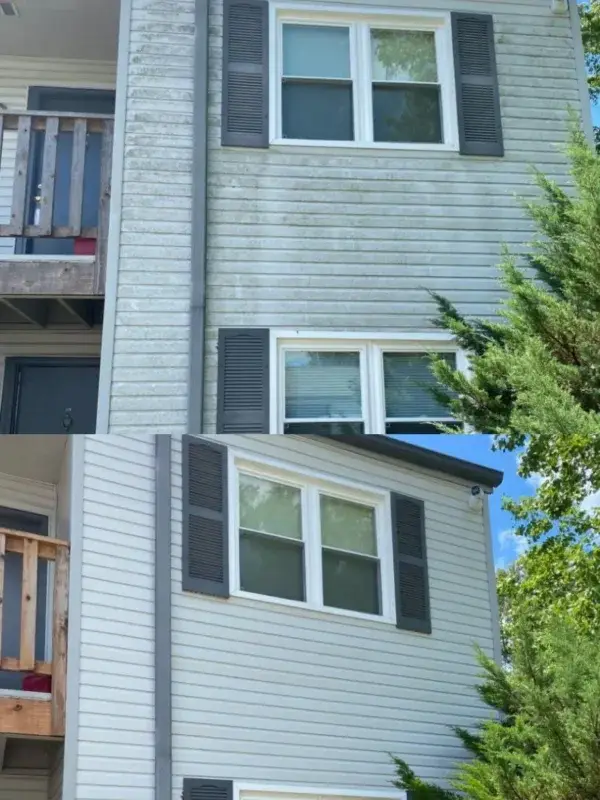
Use mild dish soap in a bucket of water as your vinyl siding cleaning solution for everyday dirt. Light mildew responds to 70% water and 30% white vinegar. A soft brush and a garden hose finish the job.
By the ACM Pros team, Madison, AlabamaPublished 11 minute read
Use mild dish soap in a bucket of water as your vinyl siding cleaning solution for everyday dirt. Light mildew responds to 70% water and 30% white vinegar. A soft brush and a garden hose finish the job. Test any mix on a hidden spot first, then rinse with clear water. Heavy mildew needs a manufacturer-approved mix with bleach, and bleach must never meet vinegar or ammonia.
Key Takeaways
- Mild dish soap or laundry detergent in water cleans everyday dirt, pollen and chalk from vinyl siding.
- A mix of 70% water and 30% white vinegar treats light mildew and algae.
- Siding makers publish one mildew mix: 1/3 cup detergent, 2/3 cup trisodium phosphate, 1 quart bleach, 3 quarts water.
- Bleach mixed with ammonia or vinegar releases toxic gas, so use one cleaner at a time.
- Abrasive pads, metal brushes and strong solvents scratch or dull the finish.
By the Numbers
- 70% water and 30% white vinegar is the homemade mix for light mildew (Bob Vila).
- The manufacturer mildew mix is 1/3 cup detergent, 2/3 cup trisodium phosphate, 1 quart bleach and 3 quarts water (Georgia-Pacific).
- 1,500 to 2,400 PSI with a 40-degree tip is the power washing range for vinyl (Georgia-Pacific and Ply Gem).
- 2 to 4 hours and $20 to $30 cover a hand wash of a typical house (Bob Vila).
- One published oxygen cleaner ratio is 1 part cleaner to 20 parts water, with a 3 to 5 minute dwell (Simple Green).
- Once a year is the recommended washing schedule (CertainTeed).
- $200 to $450 is the professional price for a 2,000 square foot house, based on 4,932 quotes (Yelp).
- $300 to $650 is the range for a two-story house (This Old House).
- 54.34 inches is the 1981 to 2010 normal yearly precipitation in Huntsville (National Weather Service).
What Is the Best Vinyl Siding Cleaning Solution?
The right vinyl siding cleaning solution is the mildest mix that removes your specific stain. Dish soap in water handles dirt and pollen, while a vinyl-safe mildew cleaner handles black or green growth.
Georgia-Pacific, Ply Gem and CertainTeed all start with soap, a soft brush and a garden hose before any stronger product. We follow the same low-pressure approach during house washing across North Alabama.
What to wash vinyl siding with depends on the problem, so the table below pairs each problem with a manufacturer-backed solution.
Vinyl Siding Cleaning Solutions by Problem
| Problem | Cleaning solution | Strength |
|---|---|---|
| Dust, pollen and light dirt | Dish soap or laundry detergent in water | Mild |
| Light mildew or algae | 70% water and 30% white vinegar | Mild |
| Heavy dirt | 1/3 cup detergent, 2/3 cup trisodium phosphate, 1 gallon water | Strong |
| Heavy mildew | Same mix plus 1 quart of 5% bleach, with 3 quarts of water | Strong |
| Algae and organic stains | Peroxide-based oxygen cleaner, mixed as labeled | Moderate |
| Tar or caulk smears | Mineral spirits on the spot, then a full rinse | Spot only |
Each row uses the weakest option that works, which keeps the finish and nearby plants safe.
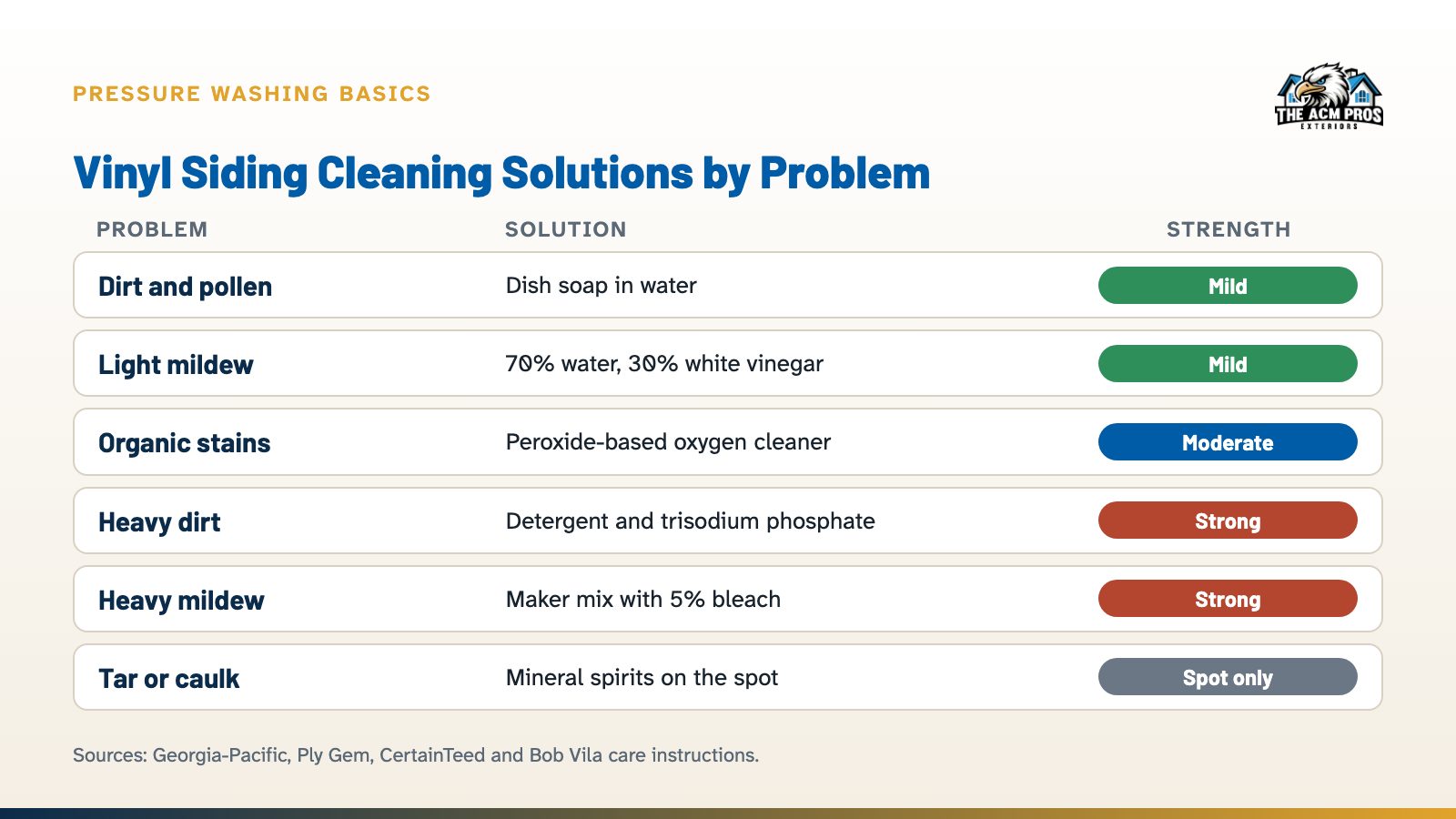
The chart above groups each problem with its solution, and the flow below turns that into four quick checks.
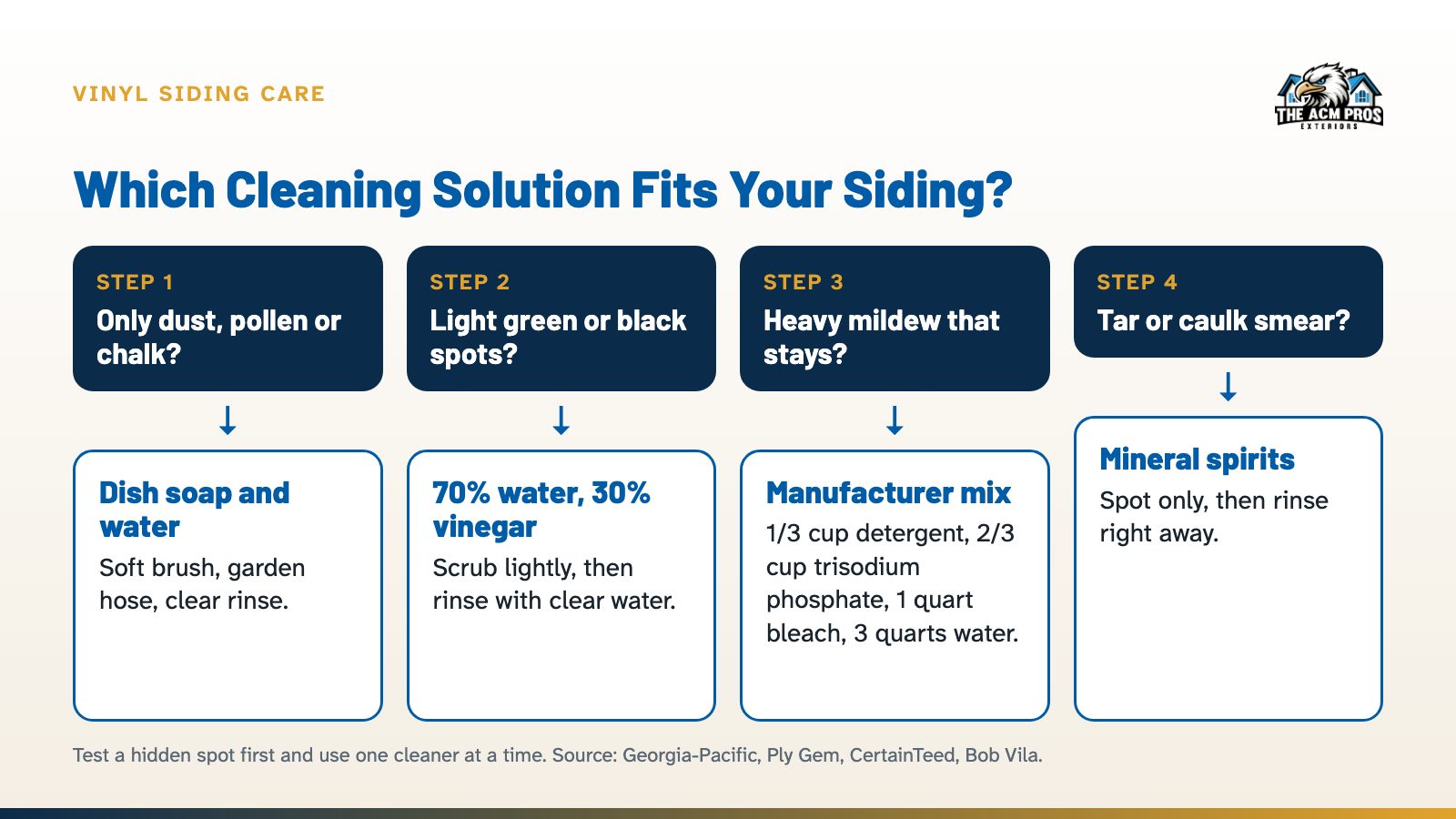
The flow starts with the mildest solution and moves up only when a stain stays, which protects the finish.
What to Use to Clean Vinyl Siding on a House?
What to use to clean vinyl siding is a bucket of soapy water, a soft-bristle brush and a garden hose. CertainTeed names dish soap and laundry detergent as working choices for dirt and chalk.
A typical home project takes 2 to 4 hours, according to Bob Vila. The same source puts the material cost at $20 to $30.
The basic kit has five items.
- A garden hose with a spray nozzle
- A bucket for the cleaning solution
- A long-handled, soft-bristle brush
- Dish soap or laundry detergent
- Rubber gloves for the stronger mixes
Soap and a soft brush leave the vinyl surface unscratched, which sets up the question of which soap works.
What Can I Use to Clean Vinyl Siding Without a Pressure Washer?
You can use soapy water, a soft brush and a garden hose to clean vinyl siding without a pressure washer. A hose-end sprayer adds reach for upper rows.
CertainTeed does not recommend power washing vinyl, so this hand method is the manufacturer-preferred route. Gentle pressure is the aim.
What Is the Best Soap to Use on Vinyl Siding?
A mild dish soap or laundry detergent without abrasives is the soap to use on vinyl siding. CertainTeed and Ply Gem both name detergent as the starting point for dirt.
Plain soap removes dust, pollen and the chalky film that sunlight leaves on pigmented siding. A small amount of soapy water should not harm plants. CertainTeed suggests a soap without added phosphates near close plantings.
Is Dawn Dish Soap Good for Vinyl Siding?
Dawn dish soap is good for vinyl siding when it is diluted in warm water and rinsed away. Any mild dish soap cuts everyday grease and grime the same way.
Dish soap does little against established mildew or rust, so a stronger step follows when black spots remain.
What Is a Good Homemade Cleaning Solution for Vinyl Siding?
A good homemade cleaning solution for vinyl siding is 70% water and 30% white vinegar. Bob Vila recommends this mix for mold and mildew buildup.
A solution to clean vinyl siding should stay gentle, and homemade mixes cost less than store concentrates. Store concentrates run about $12 to $37.
Does White Vinegar Clean Vinyl Siding?
White vinegar cleans vinyl siding that has light mildew, algae or dirt film. A 30% vinegar mix in water cuts the growth without harsh chemicals.
Vinegar is an acid, so a rinse with clear water finishes the job and protects nearby plants. A cleaner labeled for vinyl is the better pick when the manufacturer says so.
Can Vinegar and Dawn Be Used to Clean Vinyl Siding?
Vinegar and Dawn can be used on vinyl siding as two gentle steps, a soap wash and then a diluted vinegar spray. Neither product harms vinyl at household strength.
Soap residue slows rinsing, so use a generous hose rinse between the steps. Never add bleach to either product, because bleach plus vinegar gives off chlorine gas.
How Can I Make My Own Vinyl Cleaning Solution?
You can make your own vinyl cleaning solution in five steps with a bucket, white vinegar and water. The steps below keep the strength gentle.
- Pour 7 parts water and 3 parts white vinegar into a clean bucket or pump sprayer.
- Test the mix on a hidden spot and wait until it dries.
- Wet the siding with a hose, then apply the solution from the bottom up.
- Scrub lightly with a soft-bristle brush, one row at a time.
- Rinse from the top down with clear water before the mix dries.
Georgia-Pacific advises cleaning from the bottom up to limit streaks, and rinsing with clear water afterward.
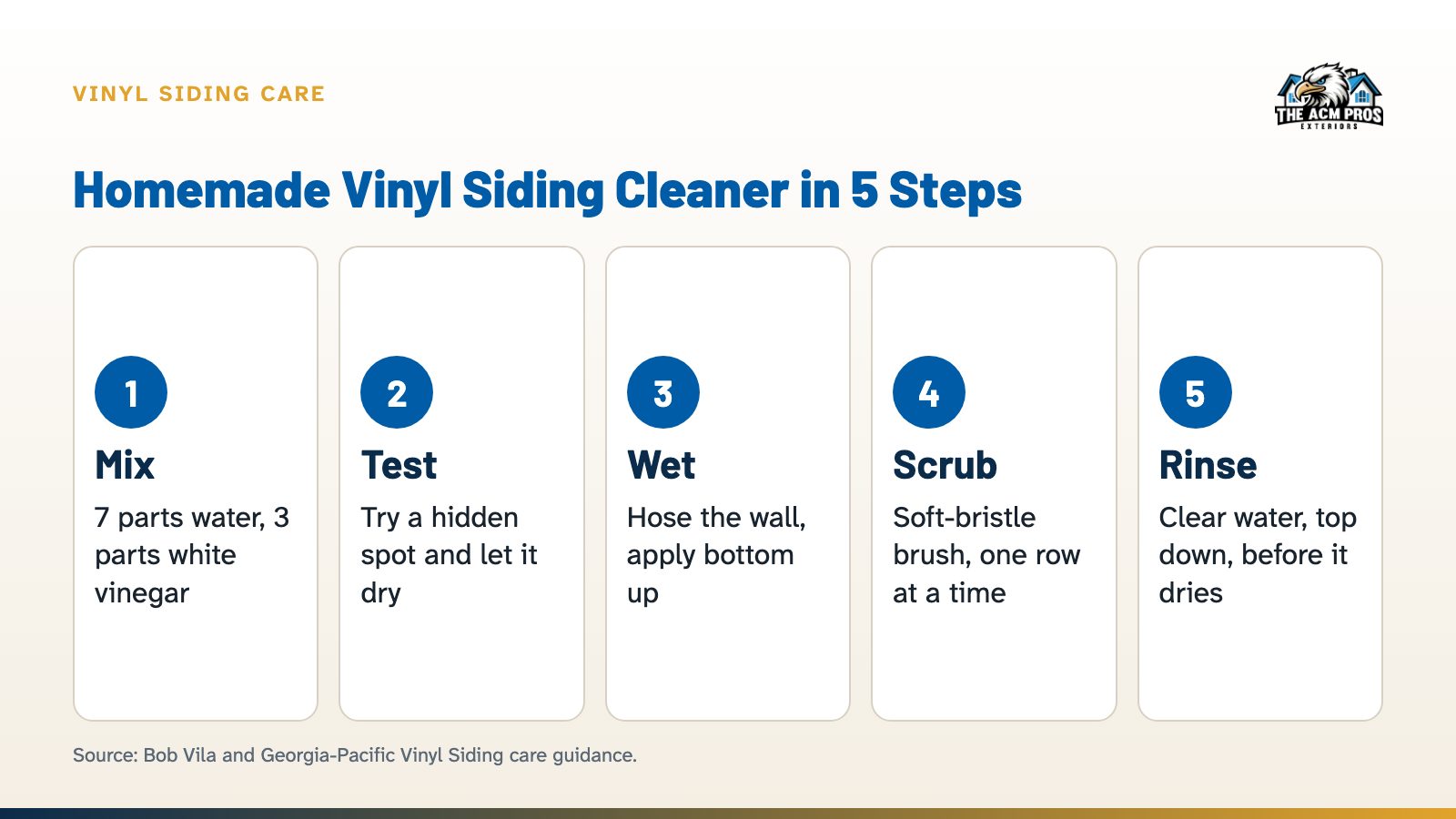
The five-step sequence above covers the mix, the test spot, the wetting, the scrub and the rinse.
A stronger problem like heavy mildew calls for the next section.
Which Vinyl Siding Wash Solution Removes Mold and Mildew?
A vinyl siding wash solution for mold and mildew combines detergent, trisodium phosphate, bleach and water. The manufacturer ratio is 1/3 cup detergent, 2/3 cup trisodium phosphate, 1 quart of 5% bleach and 3 quarts of water.
Georgia-Pacific and Ply Gem publish this exact mix for black mildew spots.
CertainTeed gives the same recipe and warns that stronger concentrations may damage the siding. Gloves are part of the manufacturer instructions.
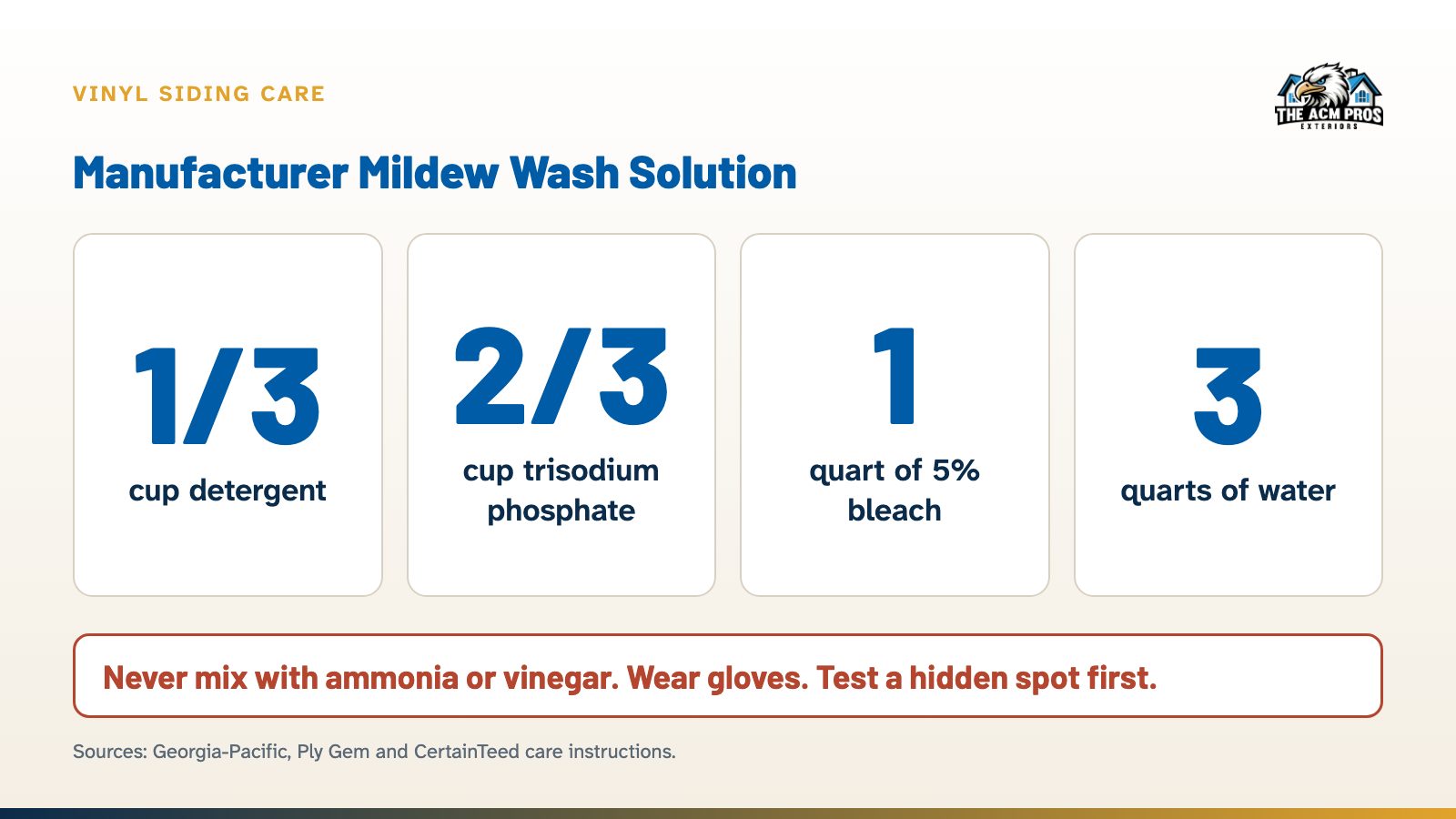
The infographic shows the four ingredients and their amounts, which set up the gentler alternatives below.
Are Oxygen Cleaners a Safer Choice Than Bleach?
Oxygen cleaners are a gentler choice than bleach for algae, mildew and organic stains on vinyl. These peroxide-based products brighten siding without chlorine.
One house and siding concentrate mixes at 1 part cleaner to 20 parts water. It rests on the wall for 3 to 5 minutes. The U.S. Environmental Protection Agency (EPA) Safer Choice program certifies it. Oxygen-based still means a chemical, so test a small area first.
Will OxiClean Clean Vinyl Siding?
OxiClean and similar oxygen bleach powders can clean light organic stains from vinyl siding when mixed as the label directs. Always test a hidden spot and rinse well.
What cleans vinyl siding safely is one product at a time. Chlorine bleach reacts with hydrogen peroxide, so never combine an oxygen cleaner with a bleach mix.
How to Clean Mold on the Side of a House?
To clean mold on the side of a house, apply the vinyl-safe mildew solution to shaded, damp areas and let it dwell. Then scrub lightly and rinse from the top down. Mold gathers where walls stay damp, such as under eaves and porch enclosures.
Fast regrowth points to shade or moisture, so trim back shrubs and fix the water source. Our crews treat stubborn growth by using the soft wash method at hose-level pressure instead of blasting.
Why Does Mildew Keep Coming Back on Vinyl Siding?
Mildew keeps coming back on vinyl siding because it feeds on the dirt layer, not on the vinyl. Georgia-Pacific states that vinyl resists mold and mildew, yet dirty siding in warm, humid climates can grow black spots.
CertainTeed names eaves and porch enclosures as trouble spots, since they get little sun or rainfall. The National Weather Service calls Huntsville summers warm and humid. Its 1981 to 2010 normal is 54.34 inches of precipitation a year.
A yearly wash removes the dirt layer that mildew needs, and trimmed shrubs let damp walls dry faster. That habit also keeps the siding ready for the safety rules in the next section.
What Should You Not Clean Vinyl Siding With?
Vinyl siding should not be cleaned with abrasive powders, metal brushes, strong solvents or undiluted chemicals. Georgia-Pacific says to avoid abrasive-type cleaners and strong solvents.
- Scouring powders and steel wool, which scratch the finish
- Metal brushes, which Bob Vila warns can mark the siding
- Strong solvents, apart from mineral spirits on tar and caulk
- Cleaner mixed stronger than the recipe, which can damage the surface
- Any two cleaners mixed without a manufacturer recipe
The last item carries the biggest safety risk, because the mixing rules below protect your lungs as well as your siding.
Products You Must Never Mix With Bleach
| Product mixed with bleach | What happens | Found in |
|---|---|---|
| Ammonia | Toxic chloramine gas forms | Some glass and window cleaners |
| Acids | Chlorine gas is given off | Vinegar, rust removers, toilet bowl cleaners |
| Hydrogen peroxide | Bleach reacts with it | Peroxide-based oxygen cleaners |
The Washington State Department of Health publishes these rules, and every row ends the same way: use one cleaner at a time.
Can I Use Windex to Clean Vinyl Siding?
Windex and other glass cleaners are not made for vinyl siding and should stay off the walls. Some glass cleaners contain ammonia, which turns dangerous the moment it meets bleach.
Dish soap and water clean the same smudges without that risk. A soft cloth handles any remaining spots.
What Do Professionals Use to Clean Vinyl Siding?
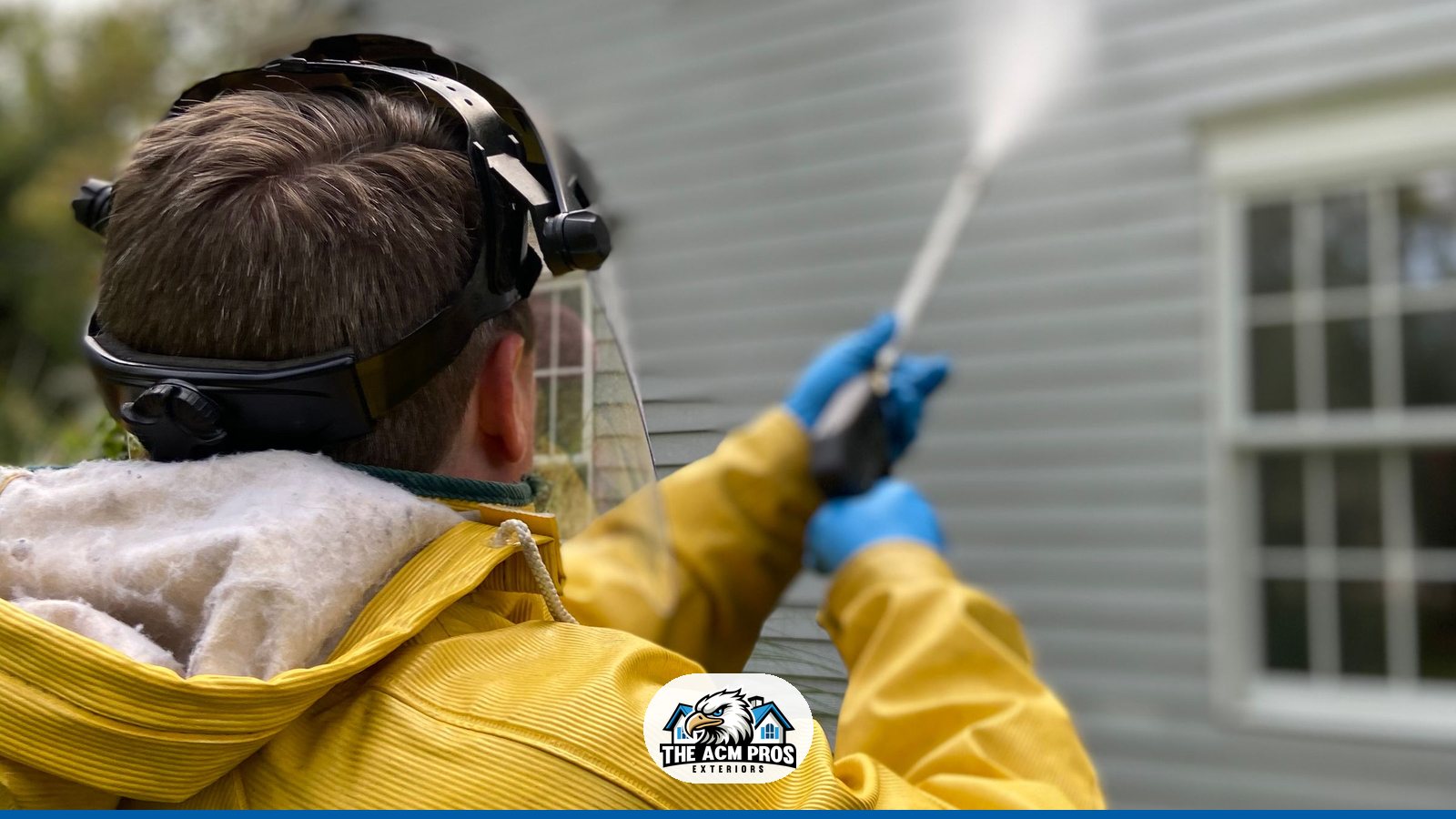
What professionals use to clean vinyl siding is a low-pressure soft wash. The solution goes on at about garden-hose pressure, dwells, then rinses off. This method kills mildew and algae instead of blasting them away.
CertainTeed advises against power washing vinyl because of the risk of moisture intrusion, damage or discoloration. The company suggests a hose-connected house wash instead.
Georgia-Pacific and Ply Gem allow pressure washing only at 1,500 to 2,400 PSI with a 40-degree tip, held straight at eye level. Aiming upward can push water behind the panels, which leads to leaks and decay.
Trained crews also know when to rinse near vents and when to protect plants. Tall walls and large homes are safer for crews than for homeowners on ladders.
Should You Use a Vinyl Siding Cleaning Solution Yourself or Hire a Washer?
Use a vinyl siding cleaning solution yourself on one story, and hire a washer for two stories or heavy mildew. Hand washing takes 2 to 4 hours and $20 to $30 in materials, according to Bob Vila.
Yelp reports $200 to $450 for professional washing of a 2,000 square foot house, based on 4,932 quotes. This Old House lists $180 to $400 for one story and $300 to $650 for two. Its siding rate is $0.15 to $0.50 per square foot.
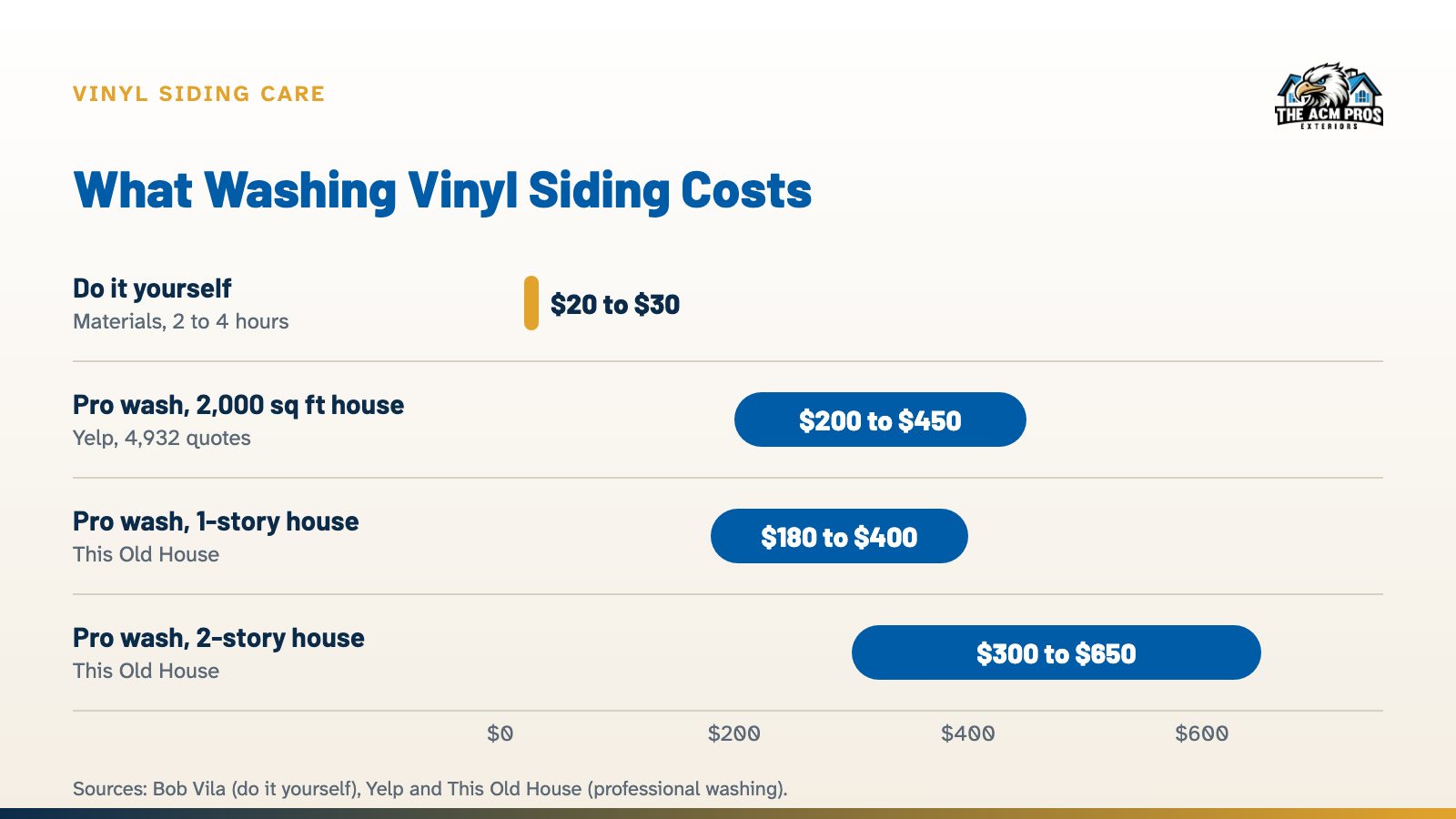
The chart puts the hand wash and the professional ranges on one dollar scale, which sets up the decision table below.
Do It Yourself or Hire a Washer
| Situation | Better choice | Reason |
|---|---|---|
| Dust, pollen or chalk on one story | Do it yourself | Soap, a soft brush and a hose do the work |
| Light mildew in shaded spots | Do it yourself | The 70/30 vinegar mix is mild |
| Heavy mildew on several walls | Hire a washer | The strong mix needs gloves and no mixing errors |
| Two stories or tall gables | Hire a washer | Ladders add risk, and upward spray drives water behind panels |
| Thinking about a rented power washer | Hire a washer | CertainTeed does not recommend power washing vinyl |
Our own rule of thumb scores one point for each item below that fits your house.
- The house has two stories or tall gables.
- Mildew covers more than one wall.
- The job needs a ladder.
- Two to 4 free hours are hard to find.
Two or more points favor a washer, and zero or one point favors a hand wash with the mildest solution that works. A short checklist keeps either path safe.
- Test the mix on a hidden spot first, as Georgia-Pacific advises.
- Soap the wall from the bottom up, then rinse from the top down.
- Wear gloves for the strong mixes, as Ply Gem directs.
- Use one cleaner at a time, per the Washington State Department of Health.
- Finish with a clear water rinse before anything dries on the wall.
With the choice made, the questions below cover the extra rules homeowners ask about next.
What Else Should You Know About Using a Siding Cleaning Solution?
Using a siding cleaning solution comes down to a few extra rules about timing, rinsing and restorers. The short answers below cover the follow-up questions homeowners ask.
How Often Should You Apply a Cleaning Solution to Vinyl Siding?
Vinyl siding needs a cleaning solution once a year to prevent buildup. CertainTeed recommends that schedule, with extra attention under eaves and porches where rain cannot reach.
How Can You Clean Vinyl Siding Without Scrubbing?
You can clean vinyl siding without scrubbing by using a hose-end sprayer cleaner and letting it dwell for the label time. Rinse from the top down once the dwell ends.
Do Spray-and-Walk-Away Cleaners Really Work on Siding?
Spray-and-walk-away cleaners work on algae and mildew when you apply them as labeled and let weather rinse them off. Results take time, and the label sets the rinse steps when no rain comes.
What Is the Best Vinyl Siding Restorer?
A thorough wash is the restorer vinyl siding needs, because the dull look comes from chalk, dirt and algae film. CertainTeed names chalk accumulation, stains and mildew as the main causes.
Worn or cracked panels need new siding instead, since no restorer repairs damaged vinyl.
Does WD-40 Restore Vinyl?
WD-40 does not appear in any siding maker's care steps for restoring vinyl. Manufacturers warn against strong solvents, so stick with soap, vinegar or a labeled cleaner.
Will a Magic Eraser Clean Vinyl Siding?
A magic eraser may lift a small scuff, but its fine abrasive texture can dull the finish. Georgia-Pacific says excessive scrubbing can leave glossy patches.
How to Make Vinyl Siding Look New Again?
To make vinyl siding look new again, wash it with the right solution, rinse clean and fix the cause of repeat stains. Black streaks below the roofline can come from algae on shingles, which roof washing addresses.
How Does The ACM Pros Apply a Cleaning Solution to Vinyl Siding?
We wash vinyl siding with a low-pressure solution that kills mildew and algae, then rinse it clean. You skip the chemical mixing, the ladder work and the cleanup. Our crews match the pressure to the surface, not to the machine.
Every estimate is free and written, so you know the scope before any work starts.
Homeowners can also read Google reviews from neighbors in the area. We are a family-owned team, led by a father and son, and we are licensed and insured.
When you want a clean exterior without the guesswork, our crew can handle the solution, the rinse and the cleanup. We explain each step before work begins, so the siding stays safe and the job stays simple.
Call (256) 585-6817 for a free written estimate.